

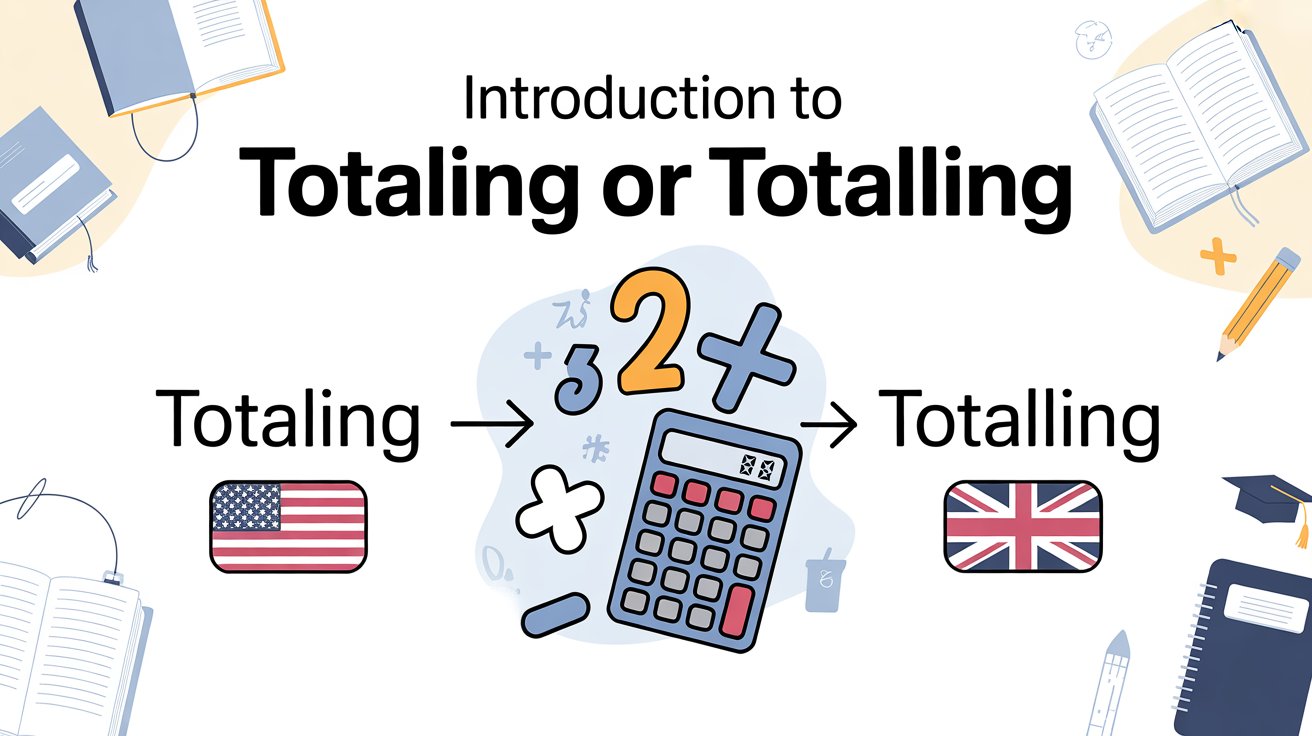
If you’ve ever paused mid-sentence and stared at the word on your screen, you’re not alone. Totalling or totaling trips up writers more often than they like to admit. One extra “l” feels small, yet it can spark doubt in emails, essays, reports, and even published books.
Here’s the good news. Both spellings are correct. The trick lies in where you’re writing and who you’re writing for.
Think of it like driving. In some countries, you stay on the left. In others, the right. Neither is wrong. You just follow the local rules. The same logic applies to English spelling variations, especially when you compare UK vs US English.
This guide walks you through the difference in plain language. You’ll see real examples, historical reasons, and practical tips you can use today. By the end, you’ll know exactly which spelling to choose and why it matters in professional writing consistency.
“Totaling vs Totalling”: What’s the Difference?
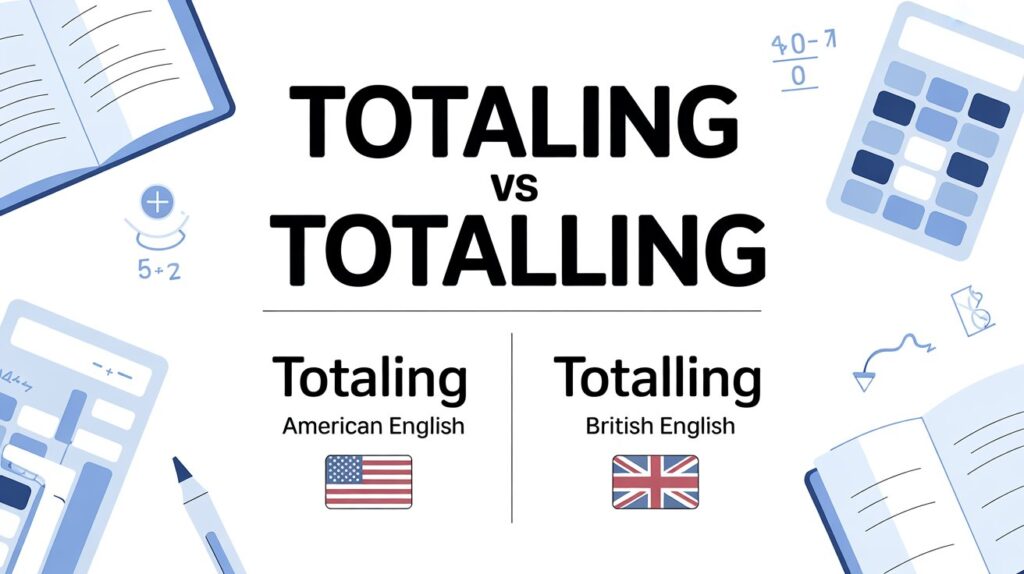
At first glance, the difference looks cosmetic. One spelling has a single “l.” The other doubles it. Yet that small change signals something bigger.
- Totaling → American English spelling
- Totalling → British English spelling
Both forms come from the same verb “total,” which means to add up amounts or calculate totals. The meaning never changes. Only the spelling does.
For example:
- In the US, an accountant might write:
“The expenses are totaling $5,000 this quarter.” - In the UK, the same sentence would read:
“The expenses are totalling £4,000 this quarter.”
Same action. Same intent. Different spelling rules.
This is a classic case of regional spelling conventions at work.
Linguistic Breakdown
To understand why this happens, let’s slow down and look at the mechanics.
The base word is total. When you turn it into a continuous verb form, you add -ing. This gives you a present participle spelling.
Now comes the key difference.
- American English keeps the single “l.”
- British English doubles the “l.”
This pattern shows up in many verbs, not just this one. Words like traveling/travelling and canceling/cancelling follow the same logic.
So when people ask about double “l” vs single “l,” they’re really asking about British vs American grammar traditions.
Grammatical Reasoning Behind the Spelling Variations
Spelling isn’t random. It follows rules. Sometimes messy ones, but rules nonetheless.
In American English, writers often apply the consonant-vowel-consonant rule (CVC) more strictly. This rule says you double the final consonant only if:
- The word has one syllable, or
- The stress falls on the final syllable
The word total does not meet those conditions in American usage. So Americans write totaling.
British English applies the rule more loosely. British spelling conventions often double the final consonant regardless of stress. That’s why totalling spelling UK looks the way it does.
This difference reflects broader spelling rules in English, shaped by history and regional preference rather than logic alone.
Quick Comparison Table
| Aspect | American English | British English |
|---|---|---|
| Preferred spelling | totaling | totalling |
| L usage | Single l | Double l |
| Region | US | UK |
| Grammar tradition | Simplified spelling | Conservative spelling |
| Style guides | AP Stylebook | Oxford Style Manual |
The Origins of Spelling Variations: British vs American English
Historical Context
To understand modern spelling differences, you need to rewind a few centuries.
In the early 1800s, Noah Webster spelling reforms reshaped American English. Webster believed spelling should be simpler and more logical. He removed what he saw as unnecessary letters.
That’s why American English favors:
- color over colour
- center over centre
- totaling over totalling
British English stayed closer to older forms. It preserved spellings that reflected tradition and etymology. This split created many of the UK vs US spelling differences we still see today.
Neither approach is better. They simply serve different audiences.
Examples of Spelling Variations
Here are a few familiar pairs that follow the same pattern:
- Traveling (US) vs Travelling (UK)
- Canceled (US) vs Cancelled (UK)
- Modeling (US) vs Modelling (UK)
Once you notice the pattern, it becomes easier to remember how totalling or totaling UK usage differs from totalling or totaling US usage.
Common Mistakes and Misconceptions with “Totaling vs Totalling”
Common Misunderstandings
Many writers believe one spelling is wrong. That’s the biggest misconception of all.
Another common mistake involves mixing spellings in the same document. For example:
- “The figures are totaling the revenue while expenses were totalling last year’s budget.”
This looks careless. Readers may not know why it feels off, but they’ll feel it.
In business and academic writing, consistency matters more than the specific choice.
Avoiding Common Mistakes
Here’s how to stay on track:
- Decide your audience first
- Match your spelling to their expectations
- Stick with one system throughout
This approach supports audience-based writing and strengthens clarity in professional documentation.
Quick Guide: When to Use “Totaling vs Totalling”
Use this simple rule:
- Writing for the US or using American style guides → totaling spelling US
- Writing for the UK or Commonwealth countries → totalling spelling UK
If your audience is global, pick one standard and apply it consistently. That’s a key part of international English usage.
“Totallin or Totaling” in Everyday Use
In real life, people don’t think about grammar rules while talking. They just speak.
You might hear someone say:
- “The bill’s totalling way more than I expected.”
- “These repairs are totaling thousands.”
Spoken English blurs these differences. Written English does not.
In financial reporting, budgeting and bookkeeping, and accounting terminology, precision matters. One extra letter can signal professionalism or carelessness.
Totalling or Totaling UK
In the UK, totalling or totaling UK debates barely exist. The answer is clear.
British writers use totalling. Style authorities like the Oxford Style Manual support this choice.
Example:
- “The damages are totalling more than £10,000.”
This aligns with British English spelling rules and broader British spelling conventions.
Related Forms: “Totaled vs Totalled”
The confusion doesn’t stop with -ing forms. The past tense spelling causes just as many headaches.
- Totaled → American English
- Totalled → British English
This follows the same double “l” vs single “l” pattern.
Examples
- US: “The car was totaled in the accident.”
- UK: “The car was totalled in the accident.”
Same meaning. Different spelling traditions.
Spell Check Tips: Avoiding Mistakes with “Totalling Vs Totaling”
Spell checkers can help, but only if they’re set correctly.
Here’s what to do:
- Choose the correct language setting
- Match it to your target audience
- Review suggestions instead of accepting them blindly
Many tools allow you to switch between British English spelling and American English spelling. This is essential for proofreading for consistency.
Synonyms for “Totaling or Totalling”
Sometimes, the best solution is to avoid the problem entirely.
Consider these alternatives:
- Adding up
- Summing
- Calculating
- Amounting to
- Aggregating
For example:
- “The costs are amounting to $3,200.”
These options work well in professional writing, especially when repetition becomes distracting.
Using “Totaling or Totalling” in Sentences
Context brings clarity. Let’s look at both forms in action.
Examples of “Totalling” in British English
- “The invoices are totalling over £15,000 this month.”
- “Her hours, when totalling the overtime, exceeded expectations.”
- “The score, totalling six points, secured the win.”
Each example follows regional English spelling norms used in the UK.
Examples of “Totaling” in American English
- “The receipts are totaling $2,400 so far.”
- “Damage costs are totaling more than we estimated.”
- “The project hours are totaling forty this week.”
These align with American English spelling rules and common US usage.
Totalled vs Totaled
This pair deserves special attention because it appears frequently in news and insurance writing.
Totalled vs Totaled: Understanding the Difference
The rule remains unchanged.
- Totaled → US
- Totalled → UK
The meaning stays the same. It usually refers to something damaged beyond repair or fully calculated.
Examples
- US news report: “The vehicle was totaled after the collision.”
- UK report: “The vehicle was totalled following the crash.”
In professional documentation, especially legal or insurance texts, the correct regional form matters.
Quick Comparison Table “totalled or totaled”
| Feature | American English | British English |
|---|---|---|
| Spelling | totaled | totalled |
| L usage | Single l | Double l |
| Region | US | UK |
| Writing contexts | Insurance, news, business | News, legal, academic |
How Do You Spell Totaled?
Ask yourself one question.
Who’s reading this?
- US audience → totaled
- UK audience → totalled
That’s it. No guessing required.
Examples in Sentences
- “The storm totaled several homes.”
- “The fire totalled the historic building.”
Both are correct within their regions.
A Final Look: Choosing Between “Totalling” and “Totaling”
Spelling choices carry quiet signals. They tell readers where you’re from, who you’re writing for, and how much care you put into your work.
Totalling or totaling is not about right versus wrong. It’s about alignment.
Choose American English spelling when writing for US audiences. Choose British English spelling when writing for UK readers. Above all, stay consistent.
That consistency builds trust. It improves clarity. It strengthens your voice in business and academic writing.
Once you understand the pattern, the hesitation disappears. The word flows. The sentence works. And your writing feels confident, polished, and human.
