

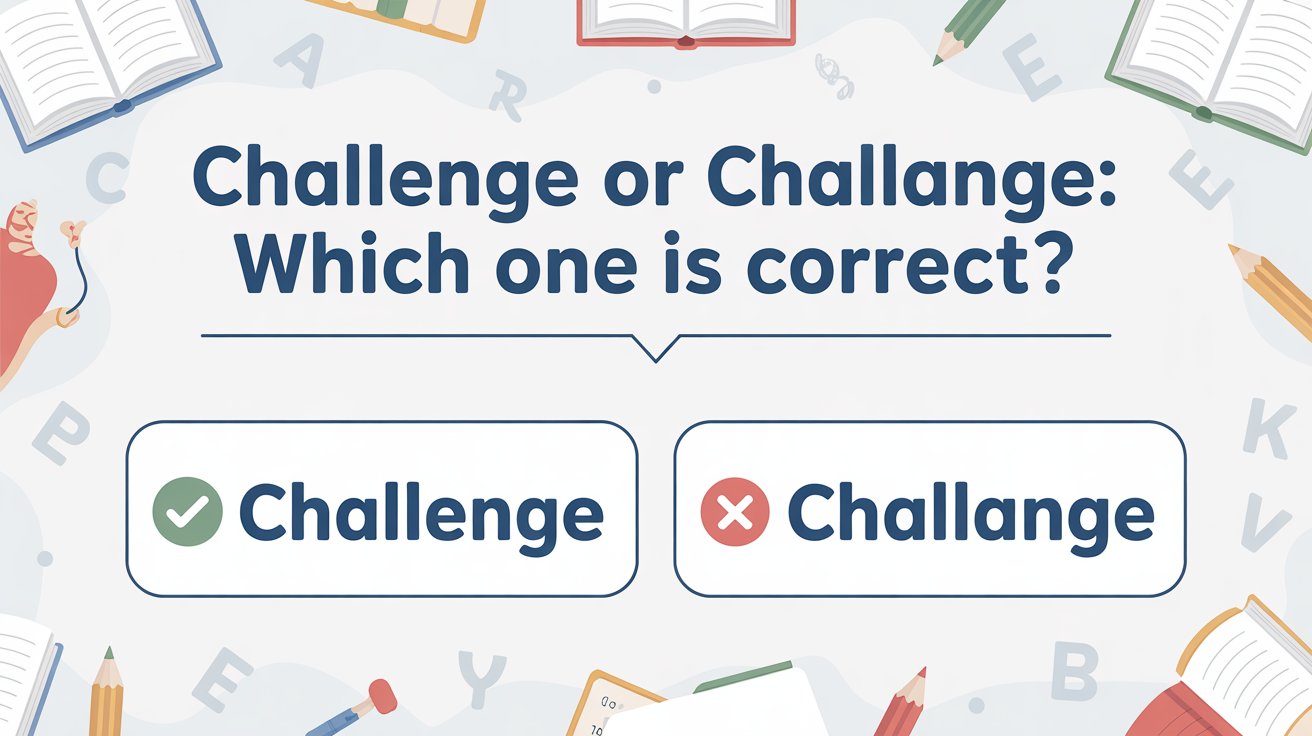
Even a small spelling error can weaken the impact and professionalism of your writing. One mistake that frequently appears is the confusion between “challenge” and “challange.” Although these two spellings look almost identical, only one of them is accepted in standard English.
Learning the correct form, understanding how it should be used, and recognizing why accurate spelling matters can greatly enhance both formal writing and everyday communication. This article breaks down the correct spelling, shares practical examples, and helps you steer clear of this common error with confidence.
Introduction

You’ve probably typed challenge or challange at least once and paused. Something feels off. Spellcheck lights up. Doubt creeps in. Do you trust your instinct or the red underline? You’re not alone. This is one of those frequently misspelled words that trips people up in emails, essays, job applications, and everyday communication.
Spelling matters more than we like to admit. A single letter can quietly chip away at writing clarity and credibility. Let’s settle this once and for all, using clear explanations, real scenarios, and practical tips you’ll actually remember.
Understanding “Challange or Challenge”
At first glance, challange vs challenge looks like a harmless spelling variation. English does that sometimes. Color and colour. Theater and theatre. However, this isn’t one of those cases.
Only one spelling is correct English spelling. The other is a common error that has spread through repetition, fast typing, and autocorrect fatigue.
So let’s answer the question directly.
The Correct Spelling: “Challenge”
The correct spelling of challenge is:
👉 Challenge
That’s it. No debate. No regional alternative. If you’re wondering is challange correct, the answer is no. Not in American English. Not in British English. Not anywhere.
Definition of Challenge
The challenge definition is straightforward and versatile.
As a noun, a challenge refers to:
- A difficult task or problem
- A test of ability, skill, or endurance
As a verb, challenge means:
- To question or dispute something
- To invite someone to compete or prove themselves
In short, challenge meaning revolves around difficulty, effort, and growth.
Usage of Challenge
This word shows up everywhere, which explains why the spelling confusion spreads so easily.
Here are a few examples of challenge in sentences:
- Starting a new job is always a challenge, but it’s worth it.
- She challenged the decision during the meeting.
- Running a marathon challenged him both mentally and physically.
Notice how challenge as a noun and verb flows naturally in everyday language.
Etymology of Challenge
Understanding history often clears up spelling confusion.
The word Challenge comes from the Old French chalenge, meaning an accusation or claim. That French word traces back to the Latin calumnia, tied to accusation or dispute.
Over time, English standardized the spelling to challenge, dropping alternative forms. Challange never made the cut, even though it looks tempting.
This background helps explain spelling patterns in English, where pronunciation doesn’t always guide spelling cleanly.
Why “Challange” Is Incorrect
Let’s be clear about why “challange” is incorrect.
- It doesn’t appear in dictionaries
- It breaks established spelling rules in English
- It’s considered a misspelling in English, not a variant
Despite how often people use it, frequency doesn’t equal correctness. That’s how many English language mistakes survive.
Spelling Mistakes: Why “Challange” Happens
So why do people spell challenge wrong?
A few reasons stand out:
- English words like change and range influence muscle memory
- The “-ange” sound feels logical
- Fast typing encourages phonetic spelling
This explains why people spell challenge wrong, even experienced writers.
Common Misspellings and Confusions
Challenge vs similar words (change, range) is where trouble starts.
Compare these:
- Change
- Range
- Challenge
Only one adds -enge, not -ange. English isn’t always fair like that.
This falls under common grammar mistakes and English spelling errors that slip past the eye.
Misspelling Examples:
Here are realistic scenarios showing correct word usage versus errors.
❌ This project will be a real challange.
✅ This project will be a real challenge.
❌ She loves a good challange at work.
✅ She loves a good challenge at work.
These small slips matter, especially in professional writing.
Tips for Remembering the Correct Spelling
Want a simple spelling guide that sticks?
Try this:
- Think of challenge as containing “edge”. Challenges push you to the edge.
- Remember: There’s no “A” after the L.
- Use spellcheck, but don’t rely on it blindly
These are practical proofreading tips that help you avoid spelling errors long-term.
Side-by-Side Comparison: Challenge vs. Challange
| Word | Correct? | Usage |
|---|---|---|
| Challenge | ✅ Yes | Standard English |
| Challange | ❌ No | Misspelling |
This quick comparison clears up the difference between challenge and challange instantly.
Everyday Usage of “Challenge”
In Work and Career
In resumes and emails, spelling errors hurt more than you think.
- Managing remote teams is a challenge.
- This role challenged me to improve my leadership skills.
Using the correct spelling matters for writing clarity and credibility, especially in challenge in professional writing.
In Sports and Personal Development
Athletes live by this word.
- Climbing the mountain was the biggest challenge of her life.
- He challenged himself to train every day.
This is challenge in everyday language at its most natural.
Legal and Court Settings
In legal contexts, challenge takes on a formal tone.
- The lawyer challenged the evidence.
- They filed a legal challenge against the ruling.
Misspelling it here would be costly and unprofessional.
Everyday Conversations
Casual talk counts too.
- Waking up early is a challenge for me.
- Let’s make this a fun challenge.
Even informal settings deserve correct English spelling.
Everyday Communication and Writing Skills
Whether you’re texting, emailing, or drafting documents, spelling shapes perception. Consistent errors suggest carelessness, even when the ideas are strong.
Improving spelling isn’t about perfection. It’s about improve writing skills step by step.
Focus on:
- Awareness of frequently misspelled words
- Learning from mistakes
- Applying basic grammar and spelling rules
That’s how you build confidence.
Conclusion
So, challenge or challange? The answer is clear.
✔ Challenge is the correct spelling
✘ Challange is a common but incorrect error
Understanding how to spell challenge correctly helps you communicate with authority and precision. Small details make a big difference, especially in professional and academic writing.
Language is already full of challenges. Spelling this word correctly shouldn’t be one of them.
Now you know. Use it with confidence.
